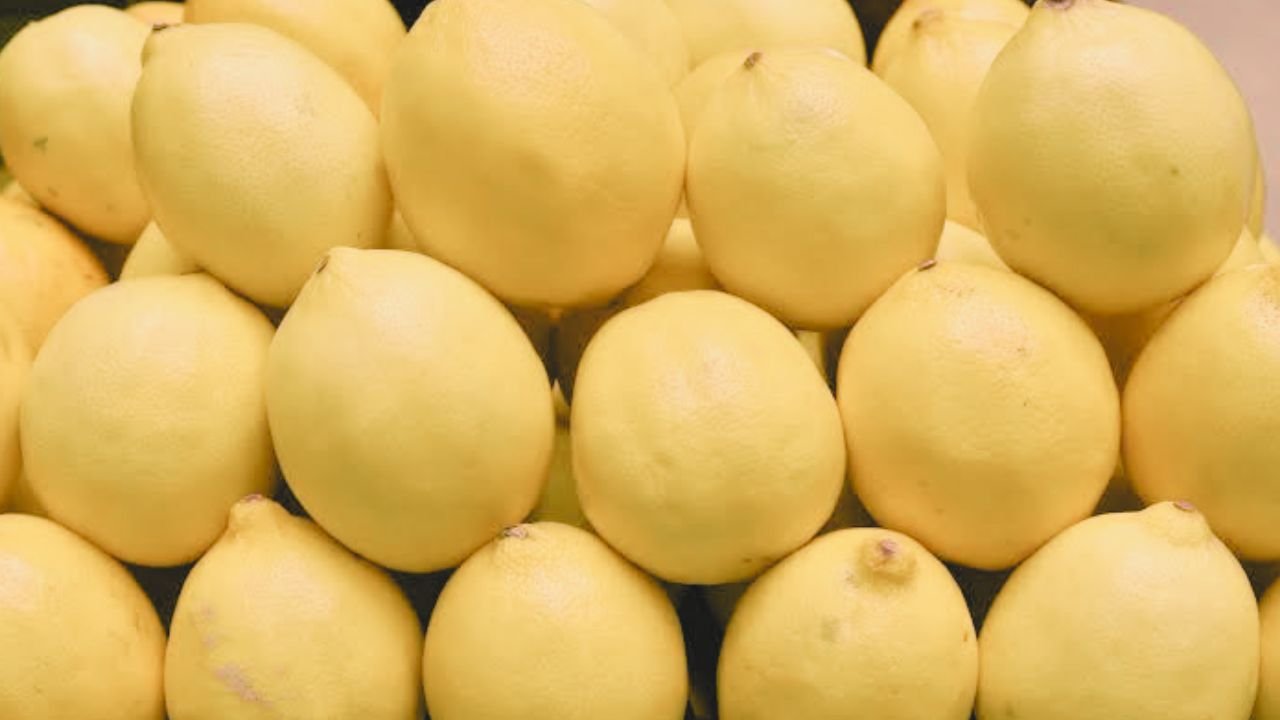
Lemons are in nearly everything — drinks, sauces, cleaning products, cosmetics, packaged foods. Most businesses that use them don’t think twice about availability. But right now, in many parts of the world, lemons are harder to source and more expensive than they were a year or two ago.
This isn’t a single dramatic event. It’s a combination of falling harvests, weather problems, seasonal timing gaps, and logistics pressure — all hitting at once. Here’s what’s actually happening, and what businesses can do about it.
Global Lemon Production Has Fallen — Here’s How Much
Global fresh lemon and lime production for 2025/26 is projected at around 10.1 million metric tons. That’s down more than 700,000 tons compared to the previous season — a drop of about 6.6% year-on-year.
What makes this more serious is that it follows a decline the year before. Over two consecutive growing seasons, global output has fallen by roughly 10.3%. That’s not a one-off. It’s a trend.
The Northern Hemisphere — which includes major producers like Spain, Turkey, and the United States — is expected to produce around 4.23 million tonnes in 2025/26. That’s a 12.38% drop compared to the previous year. When output falls across multiple major regions at the same time, you can’t pin it on one country or one bad season.
Weather, Low Yields, and Storms Are Driving the Shortage
The planted area for lemons in most major growing regions hasn’t shrunk much. Farmers haven’t stopped growing lemons. The problem is that the trees are producing less fruit per hectare than before — and that points to climate and growing conditions, not a lack of effort.
Spain
Spain is the EU’s biggest lemon producer. Its 2025/26 crop is estimated at 828,000 tonnes — down 9.6% from the prior year. More striking, yields per hectare are nearly 29% below the 2023/24 season. The planted area is roughly the same. The trees just aren’t producing as well.
United States
U.S. lemon production for 2025/26 is projected at around 1.08 million tons, down 3% year-on-year. California, which accounts for the vast majority of U.S. lemon output, is also down 3%. It’s a modest decline on its own, but it adds to the global picture.
South Africa
In South Africa’s Western Cape — a key export region — storms delayed the 2026 harvest by about three weeks. That might not sound like much, but in a market that runs on tight seasonal windows, a three-week delay creates real gaps. Supplies were constrained into late July and early August as a result.
India
India saw some of the most dramatic price swings. In Kerala, extreme heatwaves pushed retail lemon prices from around Rs 60–70 per kg to Rs 200–240 per kg within weeks. That’s a threefold increase in a short time. The cause was a combination of high temperatures in northern growing regions and supply disruptions affecting how lemons moved through the country.
The pattern across all these regions is similar: stable or growing planted area, but lower yields. That’s what makes this feel like a structural pressure rather than isolated bad luck.
Seasonal Gaps Make a Tight Market Feel Like a Crisis
Lemon supply works in seasonal windows. Spain produces at one time of year, California at another, Mexico and South America at others. Importers time their buying around these windows. When one origin runs dry before the next harvest comes in, there’s a gap — and buyers feel it immediately.
A clear example happened in late September 2025. Rain-delayed harvests in Mexico meant supply arrived late. At the same time, California’s inventories were nearly exhausted. Buyers turned to South American imports, but those were lower than expected. The result was a roughly 30-day period where global supply was tight across multiple origins at once.
Think of it like a train schedule. When one train reaches its final stop before the next one has left the station, passengers wait. Usually the gap is short, and service resumes. But when delays stack up across multiple lines at the same time, the wait gets longer and more disruptive.
Logistics problems make this worse. Port congestion, trucking shortages, and border delays can turn a manageable tight spot into a visible shortage at the retail level — even when the fruit exists somewhere in the supply chain.
The Shortage Does Not Hit Every Market the Same Way
One important thing to understand: this isn’t a uniform global crisis. The experience varies significantly depending on where you are.
Kerala saw retail prices spike to Rs 200–240/kg. At almost the same time, wholesale prices in the Nellore region of India collapsed — falling from Rs 4,500–5,000 down to Rs 1,500–2,000 per 72kg bag. Local oversupply and water-stressed yields left growers there with fruit they couldn’t sell at viable prices.
One part of the country was short of lemons. Another had too many. This kind of regional imbalance is common in agricultural markets, but it’s worth remembering when you hear broad claims about a “global lemon crisis.” The reality is more uneven.
What industry sources consistently point out is that lemon demand is actually quite stable. People and businesses haven’t suddenly started consuming far more lemons. The shortages and price swings are being driven primarily by supply — not a surge in demand.
How This Plays Out Across the Supply Chain
The pressure lands differently depending on where a business sits in the chain.
- Growers face revenue swings — strong prices in shortage regions, margin pressure where local supply is adequate or excessive.
- Exporters and importers are finding that traditional seasonal patterns are less reliable, making flexible contracts and origin diversification more valuable.
- Restaurants and foodservice businesses face higher procurement costs and less predictable availability. A chain that uses fresh lemons daily across many locations feels this quickly.
- Manufacturers and beverage companies relying on lemon juice concentrate see raw material costs rise. Some are already looking at reformulation or ingredient substitution.
- Retailers deal with price volatility and, in some cases, brief periods where shelf supply is genuinely limited.
The multi-year nature of the production decline — roughly 10.3% across two consecutive seasons — means businesses shouldn’t assume things snap back to normal as soon as one harvest improves. Markets may stay tighter than they were a few years ago even when short-term disruptions resolve.
What Businesses Can Do to Manage the Pressure
There’s no single fix here, but there are practical steps that reduce exposure and improve resilience.
Diversify Your Supply Origins
Relying on one country or one supplier makes you vulnerable to regional events — storms, harvest delays, logistics problems. Working with suppliers across multiple origins (Spain, Turkey, Argentina, South Africa, the U.S.) means a problem in one place doesn’t shut you down.
Use Longer-Term Contracts
Spot buying works fine when markets are stable and supply is ample. In a tighter market, locking in volumes and price bands through longer-term agreements gives you more certainty. It also gives growers and exporters confidence to commit supply to you rather than selling elsewhere.
Invest in Cold Storage
Bridging seasonal gaps is easier when you have the storage capacity to buy ahead. Businesses that can hold inventory are less exposed to the 30-day gaps that occur when one origin runs out before the next harvest arrives.
Consider Substitutes Where Appropriate
For manufacturers and food producers, it’s worth reviewing how much of the product actually needs fresh lemon versus lemon flavor, citric acid, or a citrus blend. This isn’t always viable from a taste or labeling perspective, but in some applications it reduces dependence on a volatile raw material.
Monitor Crop Forecasts Early
USDA forecasts, producer federation reports, and trade publications like FreshFruitPortal and FreshPlaza publish seasonal outlooks well before harvest. Reading these regularly gives you early warning when a tight market is likely — time enough to adjust contracts, build stock, or plan menu changes before a shortage hits.
For more practical advice on managing supply chain and business risk, Open Business Tips covers topics across procurement, operations, and business strategy.
Is This Temporary or a Long-Term Problem?
Some of what’s happening is short-term — harvest delays, storms, seasonal timing gaps. These resolve when new crops arrive and logistics normalize.
But the two-year trend of declining yields per hectare across major growing regions is harder to dismiss. If climate stress, water scarcity, and agronomic pressure keep reducing productivity, then tighter markets could become the baseline rather than the exception.
The honest answer is: probably both. Short-term disruptions will keep happening. And the underlying productivity trend means supply will likely remain tighter than it was five years ago, even in “normal” seasons.
Businesses that treat lemons as a stable, always-available commodity are the ones most caught off guard when something goes wrong. Those that treat them as a moderately volatile agricultural product — and plan accordingly — are in a much better position to handle whatever the next season brings.