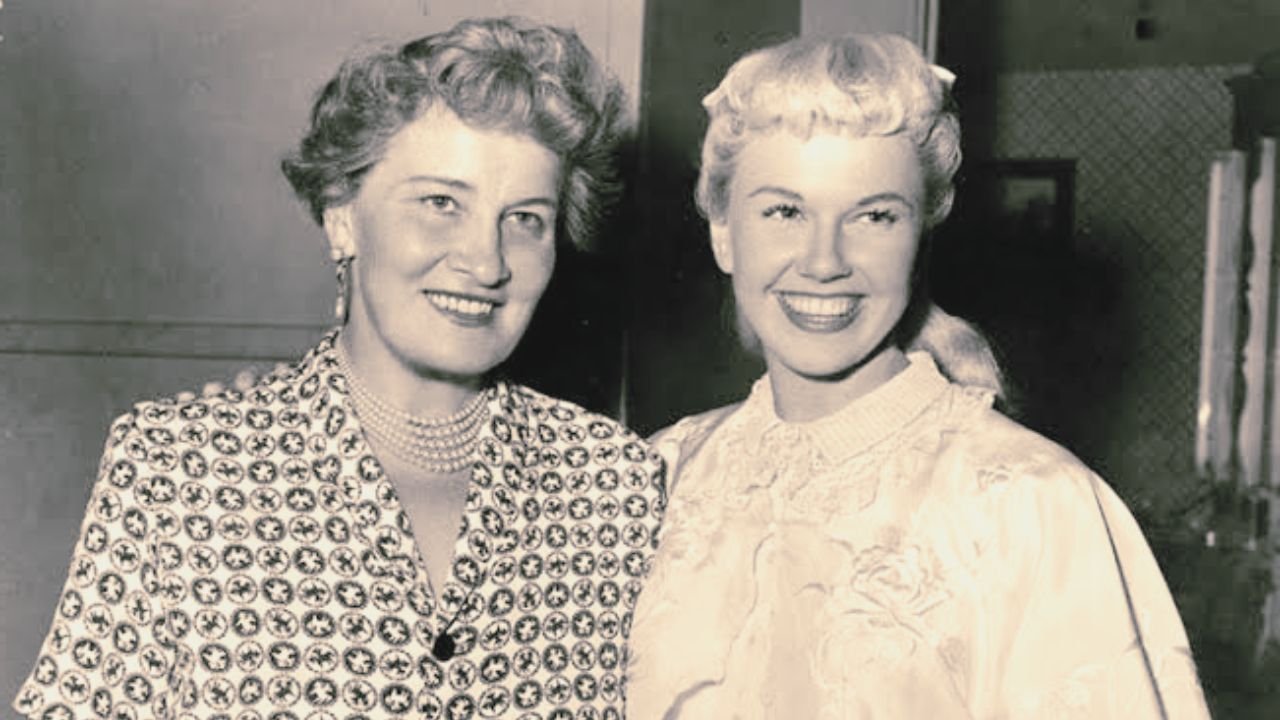
Most people recognize Doris Day as one of Hollywood’s most beloved actresses and singers. But few know the name of the woman who raised her — Alma Sophia Welz.
She was not a celebrity. She never appeared on a movie screen or recorded a song. But she was a constant presence in Doris Day‘s childhood, and her influence helped shape one of the most recognizable entertainers of the twentieth century.
This article covers who Alma Sophia Welz was, her German-American family roots in Cincinnati, her marriage and family life, and what little public record exists of her.
Who Was Alma Sophia Welz?
Alma Sophia Welz was the mother of Doris Day, whose birth name was Doris Mary Ann von Kappelhoff. After marriage, Alma is recorded in estate and genealogy sources under her married name, Alma Sophia Welz Kappelhoff.
She was not a public figure or entertainer in her own right. Most of what we know about her comes from biographies of Doris Day, genealogy records, and reporting connected to Doris Day’s estate.
Some readers may come across different name spellings across sources — Welz, Kappelhoff, von Kappelhoff. These variations are common in historical family records and do not point to separate individuals. They all refer to the same woman and the same family.
One entertainment database lists Alma as an actress, but that label is not supported by stronger sources. The more reliable accounts — including Doris Day’s official website and a U.S. House resolution honoring Doris Day — describe Alma simply as Doris’s mother and a family figure.
Birth, Death, and Basic Biographical Record
According to estate auction reporting and genealogy-style sources, Alma Sophia Welz was born on July 6, 1895, in Cincinnati, Ohio. She is reported to have died on October 9, 1976, in Los Angeles.
These dates come from sources that include the WVXU estate auction report and an IMDb biographical entry. Because IMDb is a user-editable platform, its entries should be treated with some caution. Readers doing formal family-history research are encouraged to consult primary genealogy records for confirmation.
What is clear is that Alma outlived the peak years of Doris Day’s Hollywood career and passed away more than four decades before her famous daughter. Beyond those basic facts, the public record on Alma is limited.
Marriage, Family Structure, and the Kappelhoff Name
Alma married William Joseph Kappelhoff, who appears in some accounts under the name Frederick Wilhelm Kappelhoff. FamilySearch records list their marriage date as October 3, 1916, in Hamilton County, Ohio.
Together, Alma and William had sons and a daughter. Doris was their youngest child, born in 1922. The family tree, in simple terms, looks like this:
- Alma Sophia Welz + William Joseph Kappelhoff = Doris Mary Ann von Kappelhoff, later known professionally as Doris Day.
William worked as a music teacher, choir director, and church organist. His professional world was rooted in classical music. Alma’s personality and tastes, as described by Doris Day’s official biography, were quite different — something that becomes an interesting detail when you look at how Doris Day’s own musical career developed.
German-American Roots and Life in Cincinnati
Both Alma and William came from German immigrant families. This was not unusual in Cincinnati, which had one of the largest German-American communities in the United States during the late nineteenth and early twentieth centuries.
The family lived in Cincinnati neighborhoods including Evanston and Price Hill. Alma’s family had connections to local food businesses. Regional history reporting mentions family ties to Cincinnati bakeries and a pretzel factory, though the scale of those businesses should not be overstated.
One specific detail from local history accounts stands out. A relative named Charlie Welz reportedly operated Welz Tavern in Price Hill. For a period, Alma and young Doris lived in an upstairs apartment above that tavern. It is a small but vivid detail — a glimpse into the working-class, close-knit German-American neighborhood where Doris Day spent part of her childhood.
This community setting explains a lot about the family name, their social ties, and the environment that shaped Doris Day’s early years.
Alma’s Personality and Her Contrast With William
According to Doris Day’s official website, Alma had a lively, outgoing personality. Where William was drawn to classical music — formal, structured, and serious — Alma had a taste for what the source describes as “hillbilly” music, or what we might now call country and western.
That contrast between her parents is worth noting. Doris Day went on to record everything from big-band standards to pop ballads to lighthearted novelty songs. Her range may have something to do with growing up between two very different musical worlds at home.
Alma was not a performer herself. But her enthusiasm for music — and for Doris as a child — appears to have been genuine and consistent.
Alma’s Role in Doris Day’s Early Musical Life
A U.S. House resolution honoring Doris Day specifically states that both Alma and William encouraged their daughter to take singing lessons. That is not a small thing. In many families, early training either happens or it doesn’t, depending on what parents notice and what they choose to support.
Alma and William noticed. And they acted on it.
Doris Day’s official biography also presents both parents as meaningful influences during her Cincinnati childhood. Alma’s role was not that of a stage mother or career manager. The more accurate picture is of a supportive parent who helped open a door — and whose daughter walked through it in a way neither of them could have predicted.
What Remained: The Estate Auction and Alma’s Personal Items
In 2020, a Doris Day estate auction raised nearly three million dollars. Among the items sold were personal belongings that had belonged to Alma, including a gold charm bracelet identified as hers in auction reporting.
It is a small detail, but it tells you something. Doris Day kept her mother’s things. Those objects traveled from Cincinnati to Los Angeles and remained in Doris Day’s possession for decades after Alma’s death in 1976.
For anyone researching the Doris Day family history, the auction reporting is one of the few sources that mentions Alma directly by name, provides her reported birth year, and confirms her married name in a public context.
If you enjoy exploring the personal stories behind well-known public figures, Open Business Tips covers a wide range of topics connecting real people to their careers, families, and backgrounds.
A Private Woman Connected to a Very Public Life
Alma Sophia Welz is not a household name, and she never tried to be. She raised her children in Cincinnati’s German-American neighborhoods, encouraged her youngest daughter’s musical talent, and lived long enough to see Doris Day become one of the most famous entertainers in the world.
What the public record gives us is limited — a birth date, a death date, a marriage record, a few personal details from family biographies, and a charm bracelet sold at auction. But those fragments are enough to draw a clear picture of who she was: a Cincinnati woman from a German immigrant family, with an outgoing personality and a love of music, who raised a daughter the whole world came to know.
She was not famous. But she mattered, in the quiet way that parents often do — shaping someone extraordinary long before the world noticed.
Also Read: