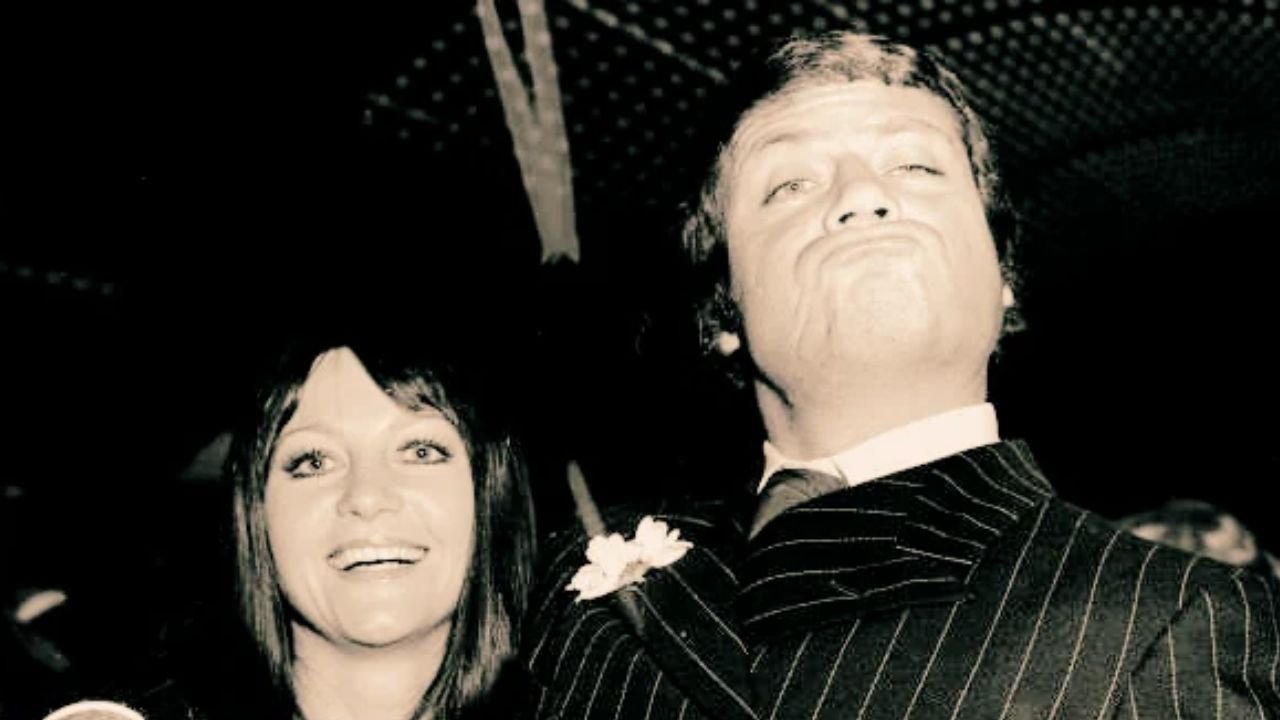
Jacquie Daryl is a name that shows up in celebrity searches, genealogy records, and classic British film histories. Yet reliable public information about her life is surprisingly hard to pin down. Most people encounter her name through two things: her role in the 1963 musical film Summer Holiday and her long-term relationship with British actor Oliver Reed.
This article covers what is actually known about her — her dance and acting career, her most recognizable screen credits, her relationship with Reed, their daughter Sarah, and where the public record honestly runs out.
Who Jacquie Daryl Was?
Jacquie Daryl also appears in records as Jacqueline Daryl or Jackie Daryl. She was a British performer whose documented career ran from the late 1950s through the late 1960s.
She was a trained ballet dancer who also worked in British film and television. That combination — classical dance training alongside screen work — was not unusual in British entertainment at the time.
It is worth being clear about her public profile. Daryl was not a major headline celebrity in her own right. Her name has stayed in circulation mainly because of film records, Oliver Reed’s biography, and the kind of family-history research people do through genealogy databases. That context matters when reading anything written about her online.
Specific details like her birth date, birthplace, and age do not appear in verified primary sources. Any site that states these with confidence should be treated carefully, as many secondary biography pages repeat the same unconfirmed details.
Her Career as a Dancer and Screen Actress
Daryl trained in ballet and was associated with ballet performance and BBC television work before and alongside her screen career. The exact nature of any institutional dance engagement she held has not been confirmed in a reliable primary source, so it is safest to describe her simply as a trained ballet dancer with television experience.
Her screen career was relatively short. The credits that appear consistently across film records and secondary sources point to a modest career concentrated in the 1950s and 1960s, not a large or extensive filmography.
Her best-known role is Mimsie in the 1963 British musical film Summer Holiday. The film starred Cliff Richard and was a popular production of its era. It remains the most firmly documented screen credit connected to her name.
Summer Holiday is a good example of where her two professional worlds — classical dance and British musical cinema — came together. Films of that type often drew on dancers who could also hold their own in front of a camera. Daryl fit that profile.
Her Role in Oliver! and How She Met Oliver Reed
The last screen credit commonly associated with Daryl is a dancing appearance in the 1968 film Oliver!. This was a major British production — a big-budget musical adaptation of Charles Dickens’ Oliver Twist — and it brought together a large cast and crew.
Oliver Reed also appeared in Oliver!, playing the villain Bill Sikes. Reports consistently state that this is where Daryl and Reed met. Their paths crossing on a production of that scale is easy to understand — it was one of the most significant British films of that year.
After Oliver!, Daryl appears to have stepped back from screen work. There are no well-documented credits after 1968. Whether that was a deliberate choice or simply how her career unfolded is not something the public record answers clearly.
Jacquie Daryl, Oliver Reed, and Their Daughter Sarah
This is the question most readers arrive with, and the answer is fairly straightforward once the family structure is laid out properly.
Daryl and Reed were long-term partners. They were not married. This is an important distinction because Reed had previously been married to someone else entirely — a woman named Kate Byrne — and that detail sometimes causes confusion.
Here is the family structure clearly:
- Oliver Reed and Kate Byrne (married): had a son, Mark Reed.
- Oliver Reed and Jacquie Daryl (partners, not married): had a daughter, Sarah Reed, born around 1970.
Genealogical records, including a source that cites The Telegraph, identify Sarah as the daughter of Robert Oliver Reed and Jacquie Daryl. The same records list Mark separately as Reed’s child from his marriage to Kate Byrne. These are two distinct family lines, and it is easy to muddle them if you are following a family tree without context.
Some commonly repeated accounts describe Daryl and Reed’s relationship as lasting roughly twelve years. That figure circulates widely, but no specific sourced document has been identified to confirm it precisely. It is repeated often enough to note, but cautiously.
What is clear is that the relationship produced a daughter and lasted for a significant portion of Reed’s adult life. Beyond that, the details of their private life together are not well documented in public sources.
What Is Known About Her Life After the 1960s?
After her appearance in Oliver! in 1968, Daryl largely withdrew from acting and public attention. There are no reliable reports of further screen work, public appearances, or statements attributed to her in later decades.
This is where the public record honestly stops. Some biography websites make claims about her later life — where she lived, what she did — but these details are not supported by the kind of sourcing that would make them trustworthy. It would not be accurate to repeat them here as fact.
What can be said is that she raised a daughter with one of Britain’s most prominent actors of the era, and she appears to have chosen a life away from the spotlight once her entertainment career wound down. That is not an unusual story. Many performers from that generation moved on without leaving a detailed public trail.
It is also not known whether Daryl is currently living. No reliable source confirms this either way, so no claim should be made about it.
Why Her Name Still Comes Up?
Jacquie Daryl keeps appearing in searches for a few converging reasons. Classic British cinema fans researching Summer Holiday or Oliver! encounter her name in cast records. People exploring Oliver Reed’s biography find her as the mother of his daughter Sarah. Genealogy researchers building family trees for the Reed family land on her name in databases like those maintained by services that compile historical records and user-contributed family histories.
None of that makes her a household name. But it explains why she is a consistent low-level search subject decades after her screen career ended.
If you are researching Oliver Reed’s family specifically, resources like Openbusinesstips can be a useful starting point for navigating biographical and historical topics with a careful eye on what is confirmed versus what is speculation.
For anyone who finds Daryl’s name in a family tree or a film database and wants to know more, the honest answer is that the confirmed public record is small. She was a ballet-trained British actress. She played Mimsie in Summer Holiday in 1963. She appeared in Oliver! in 1968. She met Oliver Reed on that production. They had a daughter named Sarah. And after that, she stepped away from public life.
A Final Note on Sources
A lot of what appears online about Jacquie Daryl comes from secondary biography websites that repeat the same details without citing original sources. That does not make every claim wrong, but it does mean readers should approach confident-sounding specifics — exact birth years, precise relationship timelines, claims about her later life — with some skepticism.
The most reliable anchors for her story are the film records themselves, genealogical sources that cite established publications like The Telegraph, and the documented biography of Oliver Reed. Everything else deserves a second look before being taken at face value.
Jacquie Daryl’s story is a modest one in terms of public profile, but it touches on a fascinating period of British entertainment history — ballet, BBC television, Cliff Richard musicals, and one of the defining British films of the 1960s. That is a genuinely interesting thread, even if the full picture remains only partially visible.
Also Read: